

A property advertisement creates an expectation before an agent ever speaks to a buyer. The price suggests what is available, the photographs suggest what the visitor will see, and the description suggests what the broker can deliver. When those elements disagree, the first conversation becomes an explanation of mistakes.
For a Dubai realtor, a sensible publishing routine starts with one question: can I support every material claim in this advertisement, and can the customer verify the advertisement through the official permit system?
 Dubai Real Estate Broker Study Guide
 UAE Realtor Starter Guide
The practical answer is to check the advertising permission, scan the Madmoun QR code, compare the resulting information with the finished advertisement, and confirm that the property remains available. Then keep the same facts consistent across every channel carrying the listing.
Understand what Trakheesi and Madmoun do
Table of Contents
Trakheesi is the DLD system through which real estate advertising permits are handled. Madmoun provides the QR code associated with an advertisement permit, allowing the public to reach official information and check the advertisement.
DLD’s April 2025 announcement states that real estate companies must display the QR code on their real estate advertisements, whether visual or written. Treat the code as a usable verification route: a tiny, blurred square that nobody can scan does little for the customer.
A successful scan should begin the review. It does not replace checking the owner instructions, photographs, availability, or the wording of promises. Those are separate questions your team must resolve before the advertisement reaches the public.
Why listing accuracy deserves an operating process
In April 2025, DLD reported that its advertising governance platform had monitored more than 279,000 advertisements and that 29% of monitored listings had been automatically modified. These are historical figures for the monitored group, rather than a measurement of all Dubai listings today.
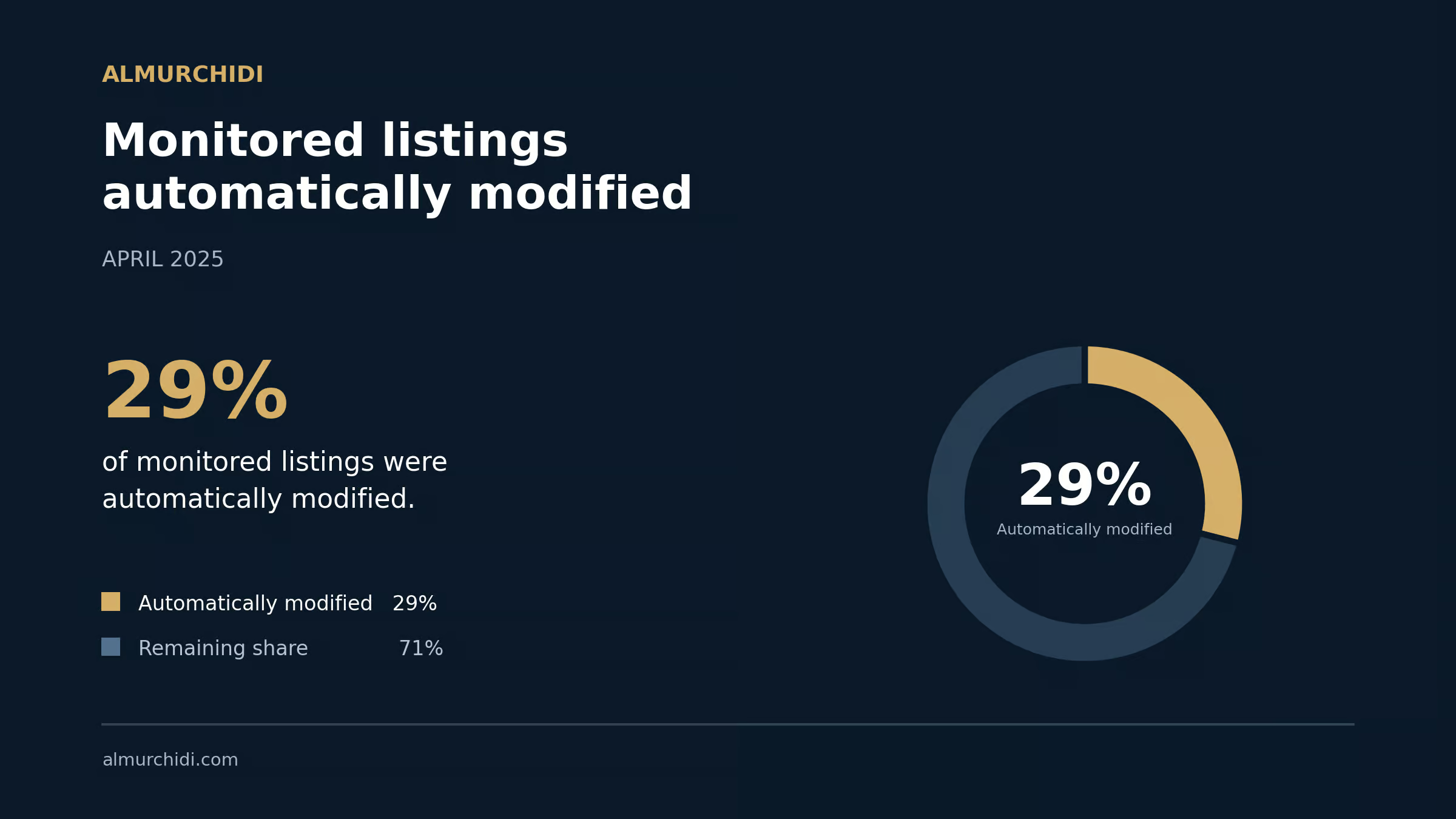
Graph 1. Percentage of monitored listings. DLD reported 29%; the remaining 71% is calculated as 100% minus 29%. The remaining share does not establish full compliance. Historical snapshot, not a 2026 market estimate.
The useful lesson for an agency is that an advertisement can be examined after it goes live. Build a process that survives that examination: someone should be able to identify the source of the price, the correct property, and the current approved version.
Do not interpret the modification percentage as a fraud rate. The announcement does not establish that every modification represented fraud, nor that the remaining advertisements passed every possible check.
Begin with a reliable property record
Before asking a designer to create an attractive advertisement, assemble a dependable property record. As an internal working practice, include the property reference, owner contact, marketing instructions, asking price, availability confirmation, photograph permissions, and the person responsible for updates.
Separate information that has been confirmed from information that is awaiting an answer. A balcony view described by an owner has a different evidence trail from a view photographed during your own inspection. Neither should quietly become a guaranteed feature without verification.
Use one shared record for the team. If the agent, coordinator, photographer, and social media manager each work from separate messages, an outdated instruction can easily survive in one version after everyone else has moved on.
Match the advertisement to the official permit information
Once the permit is available, open the finished advertisement and scan its code with another device. Compare the advertiser, property description, status, and value against the official information that is displayed.
DLD has described these comparisons as part of how Madmoun supports verification. Its December 2023 update also identified permit validity and whether the permit belongs to the advertising company among its inspection checks.
For your own review, treat a mismatch as a reason to pause publication and resolve the discrepancy. Do not assume a permit is suitable simply because it came from a colleague or looks similar to a previous listing. Record which version was checked, who checked it, and when.
Test the advertisement in its real viewing format
A designer may inspect a large image on a desktop screen while a potential tenant sees a compressed copy on a phone. Test the version customers will actually encounter.
Open the live preview, inspect the price and contact details, and try the QR code at normal viewing size. For video, check whether the verification details remain legible in the final exported version. For a carousel, review the sequence rather than approving only the cover.
This is a recommended quality check, not a claim that every channel has identical technical requirements. Where the permit category or placement requirement is unclear, obtain current guidance before publishing. Keep a record of the answer for the next campaign.
Budget using the correct permit category
DLD’s advertising permit service page lists AED 5,000 for a project launch event permit, AED 1,000 for other permits, and an AED 20 Knowledge and Innovation Fee. The page also describes separate exhibition-related charges.
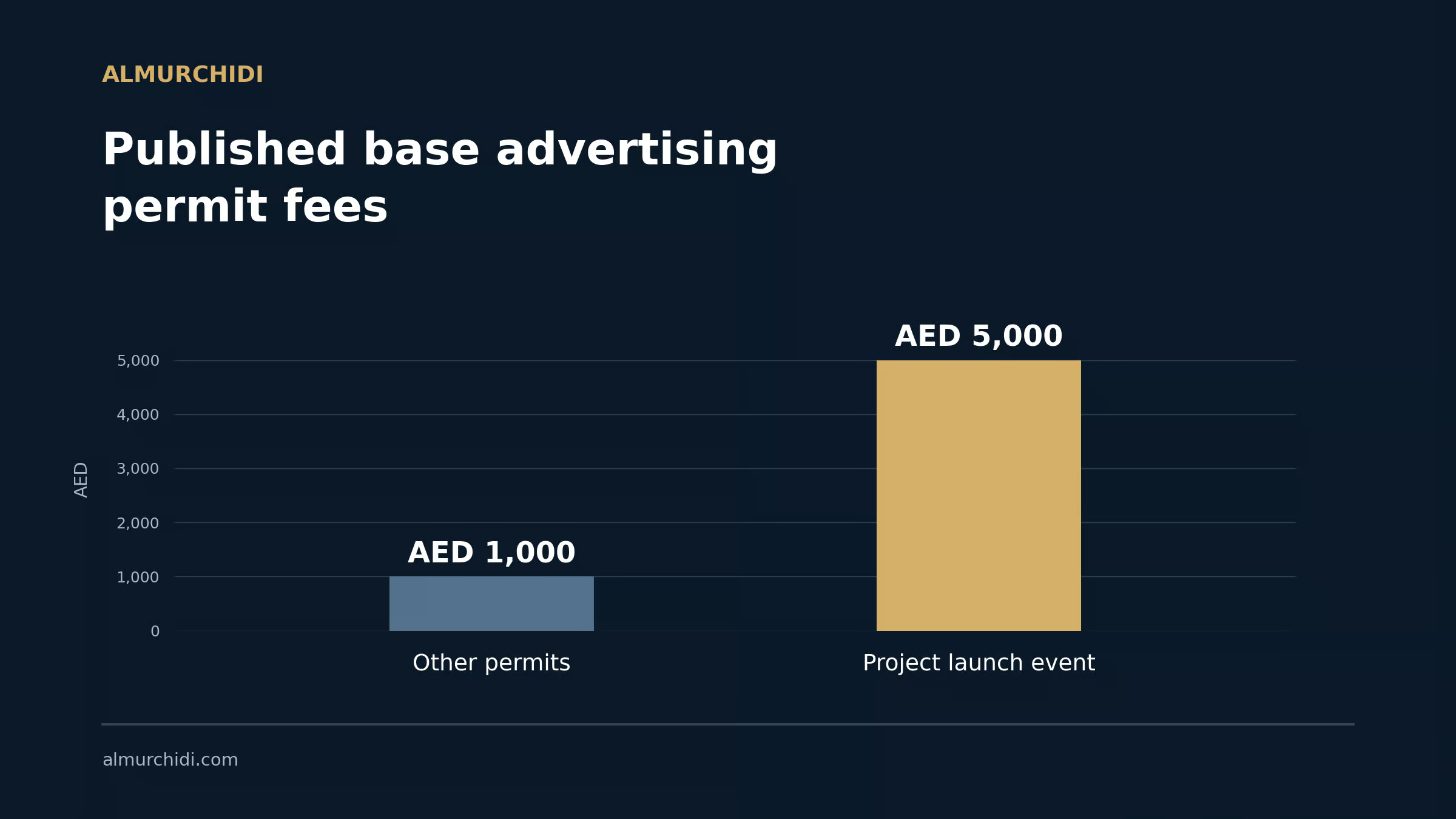
Graph 2. Base fees displayed on DLD’s service page, checked 26 October 2026. Excludes the listed AED 20 Knowledge and Innovation Fee and separate exhibition charges. Confirm the applicable category and final payable amount.
These published categories help an agent frame the budgeting conversation, but they should not become a promise that every proposed campaign will receive one universal quotation. Check which service applies to the activity and confirm the payable amount in the application.
Keep production expenses separate. Photography, design, portal subscriptions, paid media, and staff time belong in the campaign budget, but they are not interchangeable with government permit charges. Clear cost categories make owner discussions easier and reduce surprises.
Make photographs evidence of the actual property
For an individual listing, use images you are authorised to publish and can confidently connect to the advertised property. Keep the shoot date and the original files alongside the listing record.
Review the photographs for factual implications. A furnished bedroom can suggest that furniture is included. A pool image can suggest access. A distant skyline can suggest a view from the apartment. Confirm what each image communicates before adding it to a campaign.
When using virtual staging or illustrative material, disclose its nature clearly and preserve an accurate reference image. That is an editorial recommendation for reducing confusion; it should accompany the brokerage’s current rules and any platform requirements that apply.
Write descriptions that answer the buyer’s next question
An effective description helps a suitable customer decide whether to inquire. Replace vague praise with confirmed details about the accommodation, layout, parking, furnishing, condition, and viewing arrangements.
Ask what a customer would need to know before committing time to a visit. Is the property occupied? What is included? Which costs still need confirmation? If the answer is unknown, ask the owner or responsible colleague instead of filling the gap with an assumption.
Avoid unsupported urgency and investment promises. If a claim depends on assumptions, show those assumptions and obtain the appropriate review. A concise description with dependable details gives the agent a stronger starting point for an honest sales conversation.
Use a second reviewer before launch
A practical internal routine assigns preparation to one person and final review to another. The reviewer should compare the advertisement against the source record rather than simply checking spelling.
Give the reviewer permission to stop the launch when a material detail is unresolved. An approval process becomes ineffective if commercial pressure means every item passes regardless of missing evidence.
For a small team, this can be a brief shared checklist. Larger agencies may prefer a structured approval screen. The tool matters less than the decision: somebody must confirm that the property information, verification route, and customer-facing presentation agree before the advertisement is released.
Keep every channel synchronised
Consider a hypothetical apartment advertised at AED 140,000 per year. The owner later approves AED 135,000. The coordinator updates the portal, but an older social post still shows the original price and a colleague continues forwarding yesterday’s brochure.
The problem is no longer confined to the main listing. The customer can encounter several versions of the same offer.
Maintain a distribution record showing where the advertisement appears and who controls each version. When a material fact changes, review the permit implications and update or withdraw the affected materials. Use a clear handover between the person receiving the instruction and the people managing publication.
Make availability a repeatable check
Ask someone to own the availability confirmation. A property can remain visible because everybody assumes somebody else is responsible for removing it.
Choose an internal review rhythm suited to your stock and lead volume, then add event-based checks whenever the owner changes instructions or a transaction progresses. This recommendation is an operating practice; it does not establish a legal update deadline.
Before arranging a viewing, reconfirm the details that matter to that customer. If the advertised property is unavailable, say so promptly. Offer an alternative transparently, with its own accurate information. That approach protects the relationship and gives the customer a fair basis for deciding whether to continue.
Respond to a suspected misleading listing with evidence
If an owner reports that a listing is unauthorised or inaccurate, preserve the URL, screenshots, date, advertised price, and relevant communications. Then investigate through the brokerage’s management process and the applicable platform or DLD reporting route.
A public Dubai real estate discussion reviewed for this article included an owner’s question about an allegedly unauthorised, below-market listing. A commenter identifying themselves as an agent described encountering a similar issue with a client. This is evidence of a real discussion, not proof of the allegation or the commenter’s professional status.
Resolve complaints by comparing records and correcting the customer-facing information. Avoid publishing accusations before the facts have been established.
Keep historical enforcement figures in context
DLD announced in February 2024 that 30 real estate companies had been fined AED 50,000 each for advertising non-compliance. That announcement demonstrates that enforcement has occurred; it should not be presented as a complete schedule of penalties applicable to every situation in 2026.
When staff ask about a possible consequence, identify the exact activity and obtain current authoritative guidance. Passing around a dramatic headline without context can confuse the team about what must actually change.
Training is more useful when it shows a real workflow: where information enters the agency, who approves it, where advertisements are distributed, and how a correction reaches every public version.
Measure the quality of your own process
Review a small internal sample regularly. Count advertisements with unresolved discrepancies, failed QR scans, missing image permissions, or outdated availability confirmations. Record the denominator so the results can be interpreted.
For example, finding an issue in two out of ten checked listings means something different from finding two in a thousand. These are hypothetical examples for designing your own tracking, not market statistics.
Use the results to improve the stage causing the problem. If prices are repeatedly outdated, repair the instruction handover. If codes fail after compression, change the export review. If old brochures circulate, strengthen version control. The purpose is to make accurate publication easier for the whole team.
Frequently asked questions
Is having a QR code enough?
No single visual element establishes that every statement is accurate. Scan the code, compare the official information, and check the advertisement against the property record. An attractive design and a working code still need accurate supporting details.
Can I copy a previous advertisement and replace the pictures?
Use templates for layout, but review every factual field and the relevant permission. Previous approval should not be treated as automatic approval of another property or another advertisement.
Do these Dubai procedures apply everywhere in the UAE?
This article addresses Dubai’s DLD systems. For property in another emirate, check that jurisdiction’s current requirements before adapting the workflow.
What should I do when I cannot verify a detail?
Leave the claim unpublished until the responsible person confirms it. Keep the unresolved item visible in the working record so it does not disappear during handover.
What is the most useful action to take today?
Select one live listing and review it from the customer’s perspective. Scan its code, compare the price and property details, confirm availability, and check every distributed version. Use what you find to improve the next listing before it goes live.