

A landlord wants a higher rent. The tenant opens the official calculator and gets a different answer. The agent is then expected to explain the result, protect the relationship and arrange a renewal without allowing a disagreement to grow.
For Dubai realtors, this is a practical service opportunity. A clear explanation can turn a tense conversation into a review of documents, dates and arithmetic. The strongest starting point is to separate the landlord’s proposed price, the official index result and the notice history.
 Property Inventory Manager
 Commission and Deal Tracker
The short answer is to check the correct property in the official Rental Index service, preserve the result, review the lease and communications, and explain the supported calculation. Where the documents or applicable rules are disputed, obtain authoritative clarification before promising an outcome.
Start by identifying the transaction
Table of Contents
Ask whether the instruction concerns an existing tenant renewing a contract or a genuinely new letting. Those situations should not be mixed in a single pricing conversation.
DLD’s published FAQ distinguishes between them: the rental index is indicative for a new lease, while it is mandatory in disputes about rental increases when renewing contracts.
That distinction helps agents organise their work. Comparable advertised properties can inform a discussion about a new letting, but a renewal file needs its own documentary review. Avoid assuming that the asking price of a vacant apartment automatically answers what can happen to an occupied unit at renewal.
Gather the facts before quoting an increase
Create a short renewal record containing the existing tenancy agreement, Ejari details, annual rent, expiry date, property identifiers, correspondence and any addendum. Mark anything that is missing.
Ask the client to distinguish the annual rent from deposits, utility payments and separately described charges. If the agreement includes concessions or unusual terms, flag them for review instead of quietly deciding which number should be used.
Use the same record throughout the conversation. When a coordinator, agent and property manager work from different versions of the agreement, a simple transcription error can produce a confident but unreliable answer. One checked file is a better foundation than several forwarded screenshots.
Run the official service with accurate inputs
DLD describes its Rental Index service as calculating the rental increase and average rental using property information. Its service instructions include the contract expiry date, property type, area, number of rooms and current annual rental value.
Enter the details carefully and preserve both the inputs and the resulting output. If the live service asks for additional information, use the property records rather than selecting the nearest convenient option.
A useful internal check is to have a colleague compare the completed inputs against the agreement before the result goes to either party. This is a recommended operating practice. It reduces the chance that a bedroom count, expiry date or annual rent is entered incorrectly and then repeated in a renewal notice.
Explain the increase bands in plain language
Decree No. 43 of 2013 sets maximum renewal increases according to how far the current rent sits below the approved average for comparable property. The published bands are zero, five, ten, fifteen and twenty percent.
| Current rent below approved average | Maximum increase |
|---|---|
| Up to 10% | 0% |
| 11–20% | 5% |
| 21–30% | 10% |
| 31–40% | 15% |
| More than 40% | 20% |

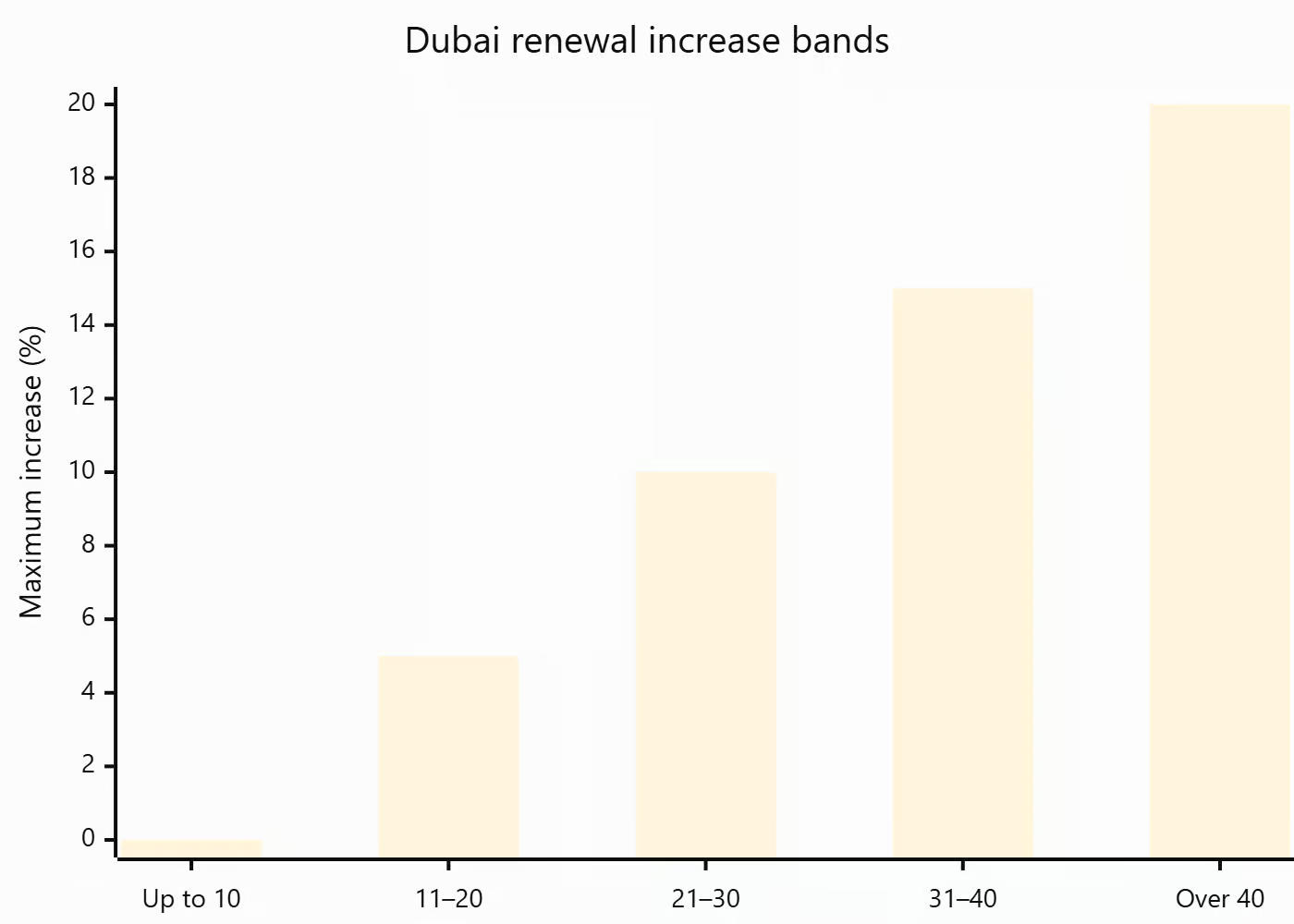
Graph 1. Horizontal categories show percentage below the approved average. Statutory bands from the decree issued 18 December 2013; checked 27 October 2026. Source.
The comparison below follows the decree’s stated ranges. Use the live official result for an actual case, particularly around a boundary; do not invent a rounding rule.
For a client, the key distinction is between the gap to the benchmark and the percentage increase allowed on the existing rent. They are different percentages with different purposes. Explaining that distinction before discussing the final amount can prevent a large part of the disagreement.
Use DLD’s worked example to show the arithmetic
DLD’s Tenancy Guide provides an example with an official average of AED 80,000 and an existing annual rent of AED 60,000. The existing rent is 25% below the benchmark: the difference of AED 20,000 is divided by AED 80,000.
The example then applies a 10% increase to AED 60,000, producing an increase of AED 6,000 and a revised annual rent of AED 66,000.
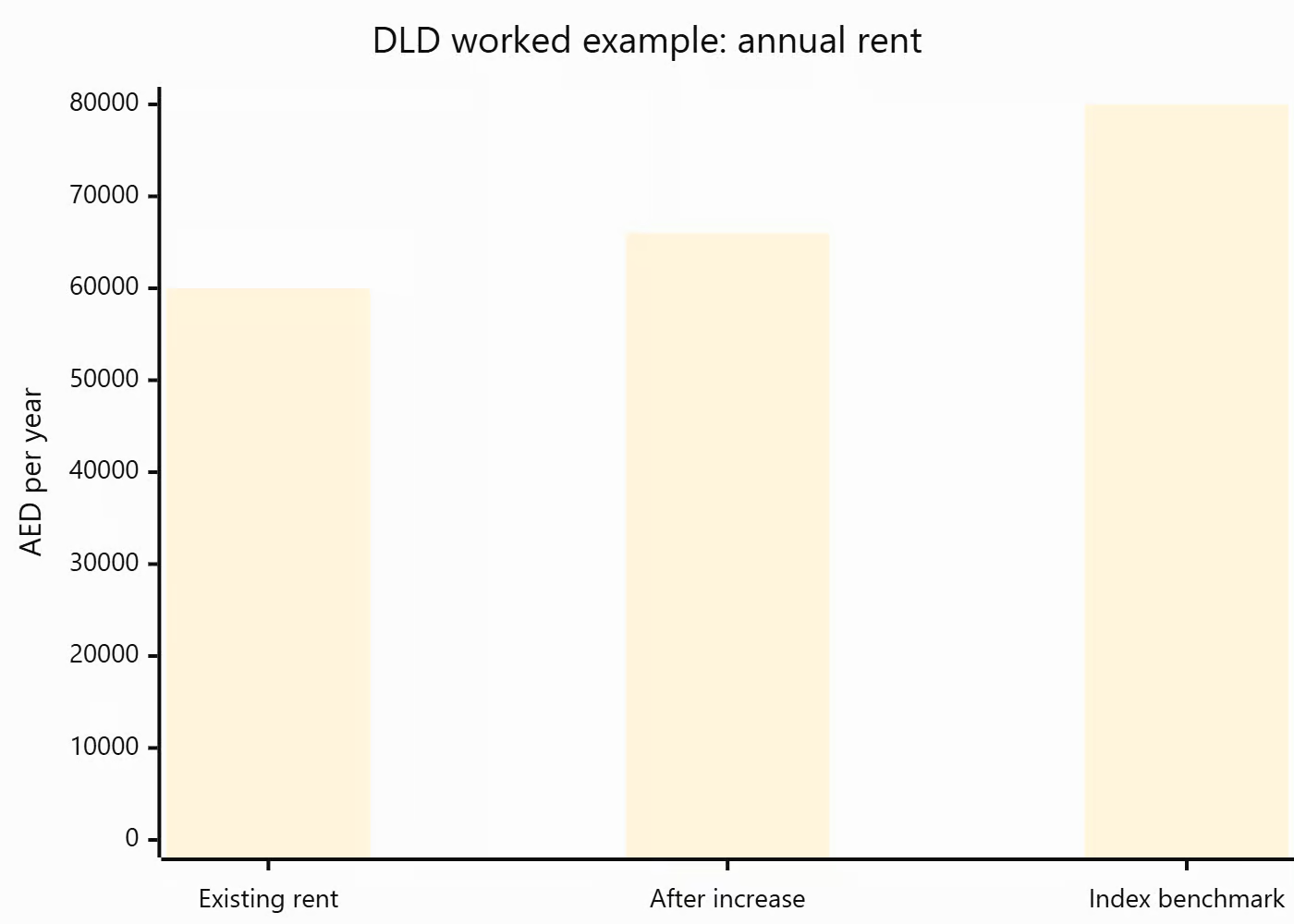
Graph 2. Official teaching-example figures, checked 27 October 2026. These are not current market observations. Source: DLD Tenancy Guide.
This example illustrates a calculation, not a current quotation for a Dubai apartment. Its figures should never be described as today’s market rent for a particular building. Show the client their own official result separately and make clear which numbers belong to the teaching example.
Review notice separately from the percentage
Article 14, as replaced by Law No. 33 of 2008, provides that a party wishing to amend lease terms must notify the other party at least 90 days before expiry, unless the parties agree otherwise.
That final qualification matters. Read the actual agreement and any relevant addendum before giving a categorical answer about a particular notice.
As a working method, place the expiry date, proposed change, communication date and evidence of delivery together in one timeline. Preserve the original messages. If the legal effect of the wording, delivery or contractual provision is disputed, refer that issue for qualified review instead of resolving it through a quick calculation.
Handle changing index results carefully
Public questions also focus on timing: what happens if an earlier calculator result differs from a later one? A discussion reviewed for this article described a July renewal request and a different result appearing subsequently.
DLD’s 2025 guidance discusses the relationship between notice, eligibility and renewal date, including the specific transition from the previous index to the new index. That historical transition guidance should not be treated as a complete answer to every later dispute about changing results.
For a current case, keep dated outputs and the inputs used for each. Ask whether the property information changed before assuming that only the index changed. Where the difference remains material, seek case-specific clarification from the appropriate authority.
Explain the result without overstating certainty
Begin with the evidence that both parties can inspect. Identify the property and contract, show the official output and distinguish the calculation from any question that still needs review.
A useful explanation has four parts: what was checked, what the service returned, how the proposed figure compares and what remains unresolved. Keep the language factual and avoid suggesting that the calculator has adjudicated every contractual issue.
After a call, send a concise written record through the agency’s normal process. Invite correction of factual errors before the next document is issued. This helps the owner, tenant and team work from the same understanding rather than relying on different recollections of a conversation.
Keep the renewal amount and other charges distinct
A renewal discussion can become confusing when rent, administration charges, management costs and registration costs appear together as one unexplained total. Separate them in the proposal.
For each additional charge, identify what service it relates to, who is requesting payment and the supporting contractual or official basis. Do not describe a brokerage charge as a government fee, or assume a charge is compulsory because it appeared on last year’s invoice.
This is a recommendation for transparent presentation, not a statement that every charge is valid or invalid. If a payment is contested, examine its basis separately. That makes the rental calculation easier to understand and keeps unresolved items visible.
Give the owner a practical decision brief
An owner may arrive with a target figure based on nearby advertisements or a conversation with another landlord. Acknowledge the instruction, then organise the decision around the evidence for this particular renewal.
Prepare a short brief showing the current contract position, official output, notice history, outstanding questions and the next step. Keep any broader market commentary clearly separate from the renewal calculation.
Avoid predicting that a tenant will accept an unsupported demand or leave immediately if they disagree. Those assumptions can lead to poor instructions. A useful agent helps the owner understand the documented position and choose a sensible response without promising a result that has not been established.
Help the tenant understand what to review
Tenants should be able to see which information produced the result. Share the relevant property details and explain the calculation without disclosing unrelated private records.
If a tenant challenges an input, check it. An objection about the bedroom count or contract date is an opportunity to correct the file, not necessarily a negotiating tactic. Record the outcome so the same question does not restart with a different colleague.
Keep communication proportionate. A disagreement about renewal should not become an exchange of threats or unsupported legal claims. Where discussion stalls, identify the unresolved point precisely and help the parties obtain the appropriate clarification.
Build a renewal calendar that leaves time to act
As an internal agency practice, begin reviewing renewals well before any applicable notice deadline. Set reminders for document collection, owner instructions, calculator checks and review of proposed communications.
Assign a named person to each stage. A reminder without an owner can remain unread until the file becomes urgent. Include a backup contact for leave or staff changes.
When the instruction arrives late, record that fact and escalate the timing issue promptly. Do not backdate records or suggest that an internal delay changes the communication history. A clear timeline allows management to assess the position and respond realistically.
Know when the file needs specialist review
Escalate when the parties dispute a material clause, the proper annual rent, the effect of a notice, the correct jurisdiction or the meaning of conflicting official results. Package the documents so the reviewer can assess the actual issue.
A helpful referral includes the agreement, relevant addenda, dated communications, calculator inputs and outputs, and a concise question. Avoid sending an unstructured message archive and asking someone to infer the problem.
Pending clarification, distinguish confirmed facts from interpretation. The agent can keep the file organised and communication constructive without making a legal determination. That preserves the value of the service while reducing the risk of presenting an uncertain position as settled.
Frequently asked questions
Does a higher benchmark mean rent can jump straight to it?
DLD’s published worked example illustrates why those amounts can differ: AED 60,000 becomes AED 66,000 even though the benchmark is AED 80,000. For a live renewal, check the official output and the applicable circumstances.
Is a screenshot from another apartment enough?
It does not establish the result for this contract. Check the actual property details and preserve the matching inputs. A screenshot without its inputs can be difficult to interpret.
What if the calculator changes before renewal?
Preserve both dated results, check the inputs and obtain current case-specific clarification where necessary. Do not resolve a disputed timing issue from an online comment alone.
Do the same steps apply throughout the UAE?
This article addresses Dubai’s DLD services and Dubai legislation. Check the relevant jurisdiction for property elsewhere and confirm the appropriate route for special cases.
What should a realtor do first today?
Choose one upcoming renewal and assemble its agreement, correspondence and official calculator output. Identify missing information, check the arithmetic and record the next responsible person. A well-prepared file makes the next conversation substantially easier.