

A buyer arrives for handover expecting a finished home. Instead, they notice damaged joinery, a leaking window and several items that were already reported at an earlier visit. The agent is asked whether the buyer should accept the keys, refuse handover or hold back the final payment.
Those are different decisions. An inspection records the property’s condition. Acceptance concerns the documents and obligations surrounding possession. Payment follows the applicable agreement and circumstances. Treating all three as one simple choice can leave the buyer poorly informed.
 Client Presentation Templates
 90-Day Realtor Content Planner
For Dubai realtors, the most useful service is to organise evidence, involve the right technical professionals and keep contractual questions visible. A photograph of a defect is a starting point; a documented route to assessment, repair and verification is the real objective.
Clarify the appointment before the buyer arrives
Table of Contents
Ask the developer what the scheduled visit covers. Is it an orientation, an inspection opportunity, a repair review or the formal handover appointment? Obtain the instructions and proposed documents in advance.
Confirm access arrangements, the people permitted to attend, available utilities and how defects should be submitted. If the buyer wants an independent inspector, request the relevant access requirements early.
Do not assume that every developer uses the same sequence or allows the same number of visits. Give the client a written appointment plan showing what is confirmed and what remains unresolved. That prevents a rushed discussion at the property from becoming the first time the buyer hears about an important restriction.
Read the agreement alongside the handover notice
Collect the sale and purchase agreement, specifications, relevant variations and handover correspondence. Identify the payment dates, inspection provisions, acceptance process and any clauses concerning defects.
Avoid telling the buyer that snagging automatically suspends payment or that collecting keys automatically extinguishes every claim. The effect of a particular step depends on the actual documents and applicable law.
If a deadline or acceptance clause is disputed, obtain qualified legal advice promptly. The realtor can organise the file and communicate questions, but should not convert an informal developer conversation into a legal conclusion about withholding funds or refusing possession.
Use an appropriately qualified inspector
A sales agent’s walkthrough is not a substitute for a technical inspection. Agree the inspector’s scope, experience, insurance position and reporting format before appointment.
Ask what systems can be assessed with the access and utilities available. If equipment cannot be operated, that limitation should appear in the report rather than being mistaken for a satisfactory result.
The agent can help with logistics, documents and follow-up. Technical conclusions about electrical safety, structural movement or concealed leaks should come from the appropriate professional. Where an issue presents an immediate safety concern, arrange the necessary specialist response and avoid using the affected area until it has been assessed.
Record defects so they can be found again
Give every reported item a unique reference. Include the room, exact location, observation, date, photograph and the inspector’s recommendation where available.
Use both a wider image showing the location and a closer image showing the problem. A photograph of chipped material without context can become difficult to match to the correct door or cabinet later.
Separate observations from explanations. Water staining is an observation; declaring the cause requires assessment. Keeping that distinction makes the report more useful and reduces arguments about whether an agent has overstated a technical conclusion. Preserve original files and any measurements supplied by the inspector.
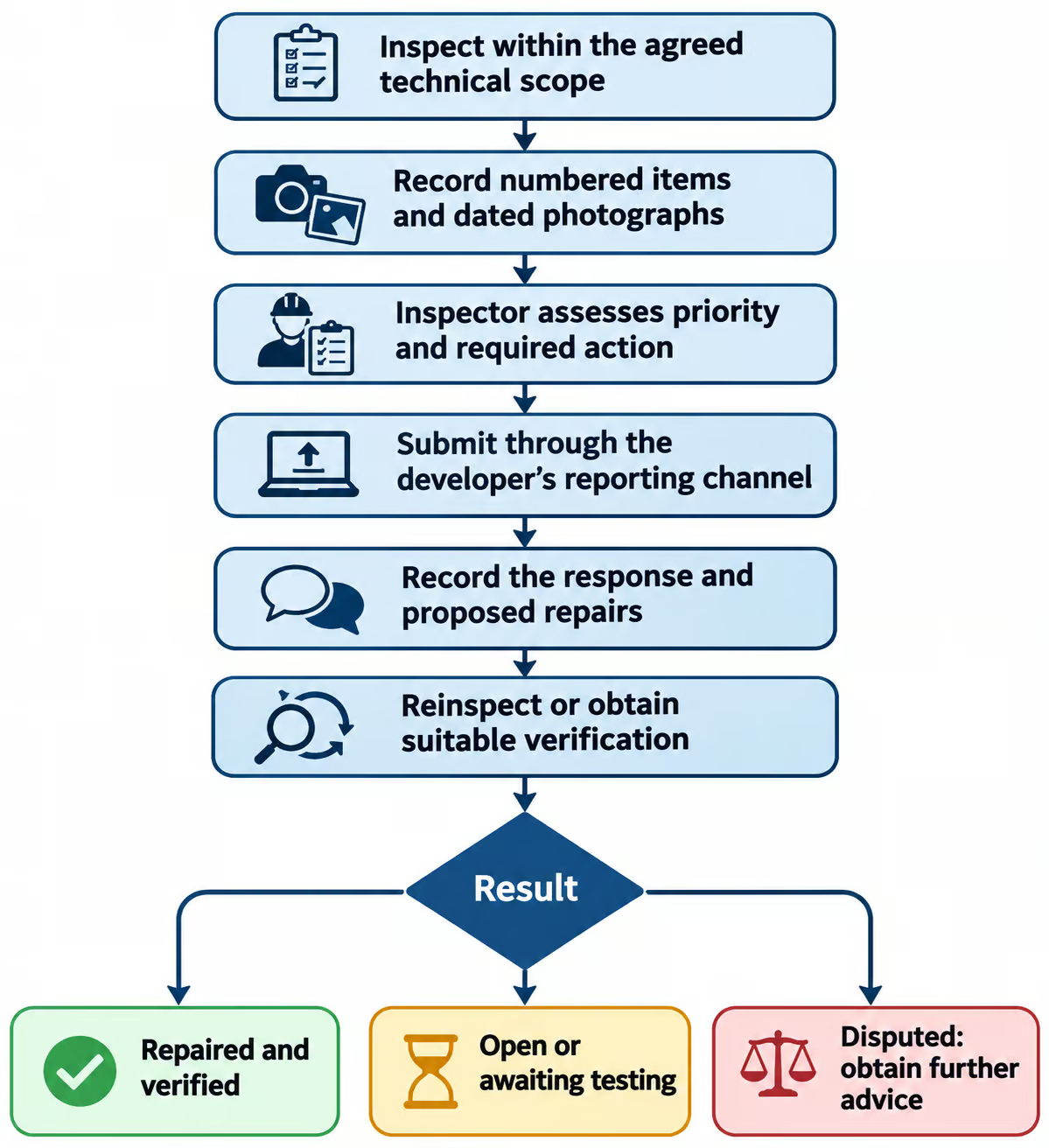
Diagram 1 — Suggested defect-management workflow, prepared 1 November 2026. This is an explanatory diagram based on the article’s practical recommendations, not an official procedure or a statistical graph. No numerical units apply.
Prioritise function and safety without dismissing finishes
A long snag list should help people act, not merely demonstrate how many items were found. Ask the inspector to distinguish urgent concerns, functional defects and cosmetic issues.
A door that will not secure, an active leak and a scratched panel can all deserve attention, but they may require different responses and specialists. Record the reason for the priority rather than relying only on a coloured label.
Do not promise that minor-looking defects are harmless. Equally, avoid describing every surface mark as structural damage. A proportionate report allows the buyer to understand the condition and the developer to identify the work requested.
Keep the legal liability periods distinct
For jointly owned real property, Article 40 of Dubai Law No. 6 of 2019 distinguishes structural defects from defective installations. It provides a ten-year structural period from the project’s completion certificate and a one-year defective-installation period generally from unit handover.
The same article specifies a different start for that installation period where an owner refrains from taking possession: the project’s completion certificate. It also preserves other applicable rights and warranties.
These provisions should not be reduced to a promise that every snag has the same deadline or remedy. Record the relevant dates and seek advice about the particular defect and property. Refusing possession should not be presented as a way to stop every applicable clock.
Submit the list through a traceable channel
Send the consolidated report through the developer’s designated process and preserve evidence of submission. Ask for a reference number, acknowledgement and the person responsible for responding.
A conversation with a site representative can be useful, but follow it with a written record. Include any promised action without presenting an unconfirmed verbal assurance as a completed repair agreement.
Keep the list controlled. If the developer uses a different reference system, map the references so both sides can identify the same item. Repeatedly sending differently organised lists can make it harder to establish which defects were accepted, disputed or left unanswered.
Review the sign-off wording carefully
Before the buyer signs any document, identify what it says about condition, acceptance, outstanding work and future claims. Obtain advice where the language has material consequences.
Do not encourage a client to sign a statement that conflicts with the recorded condition simply because the appointment is running late. If outstanding items are to be recorded, ask the adviser and developer how that should be documented correctly.
An agent should also avoid promising that adding a handwritten note will necessarily preserve every right. The aim is an accurate record and informed decision, supported by appropriate review of the actual form and agreement.

Reinspect the repair rather than closing the item by email
A message saying completed is not the same as a verified repair. Arrange an appropriate follow-up inspection or obtain suitable evidence where physical attendance is not possible.
Use the original references and compare the same location. Ask the inspector to check whether the reported problem has been addressed and whether related damage remains.
For example, repainting a stain does not establish that the source of moisture has been resolved. That assessment may require more than a photograph. Record whether an item is repaired and verified, still open, disputed or awaiting further testing. Avoid collapsing these different positions into one broad completed category.
Keep a post-handover issue log
Some problems become apparent only during ordinary use. Establish how the owner should report new issues and retain the developer’s support contacts, equipment documents and relevant records.
Date each report and describe what changed. If an item repeats after repair, link it to the earlier reference and evidence instead of treating it as unrelated.
Set practical review reminders around the confirmed contractual and statutory dates. A reminder is an administrative safeguard, not a determination of the final legal deadline for every claim. The owner should obtain advice promptly where an issue is serious or the applicable period is uncertain.
Do not confuse a defect report with a payment instruction
A buyer may ask whether to delay the final instalment until all items are resolved. The answer requires review of the payment obligation, the defect’s nature and any relevant agreement or advice.
Explain what has been technically established and what remains a legal or commercial question. Obtain the developer’s written position and refer disputed obligations for qualified review before a deadline is missed.
If a revised arrangement is negotiated, document its terms through the proper process. Do not imply that the presence of a snag list automatically authorises a deduction, retention or missed payment. Clear advice is especially important when the client is relying on the agent to coordinate the handover.
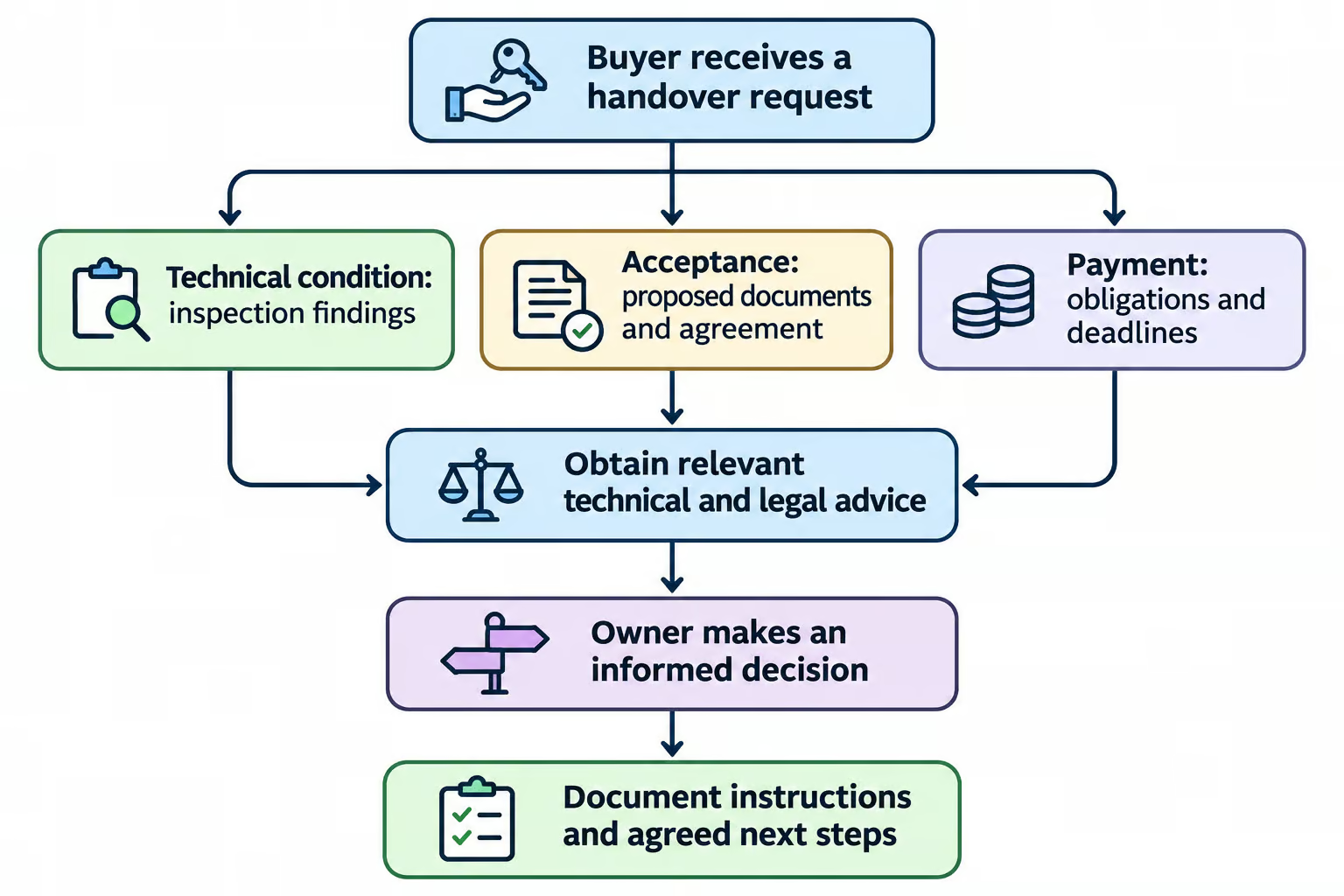
Diagram 2 — Separate the questions before making a handover decision, prepared 1 November 2026. An explanatory decision framework created for this article; it does not establish a right to withhold payment or refuse possession. No numerical units apply.
Give overseas owners a usable evidence pack
An owner outside the UAE may need someone to attend, obtain documents and coordinate repairs. Confirm the authority and access arrangements required for each task.
Prepare a concise pack with the inspection scope, report, dated images, developer responses, open items and upcoming decisions. Distinguish technical findings from the agent’s administrative notes.
Ask the owner to review important choices explicitly, particularly documents involving acceptance or changes to payment arrangements. Do not treat a general request to help with handover as unlimited authority to sign every document. Keep the scope of representation clear throughout the process.
Escalate a specific unresolved problem
When follow-up stops producing progress, assemble the evidence before escalating. Identify the defect, reporting history, developer response, technical assessment and remedy being requested.
Use the appropriate developer channel first where suitable, then obtain guidance on the competent authority or dispute route for the actual issue. Different claims can involve different responsibilities; a generic online complaint is not necessarily the correct process.
Avoid publishing allegations about a named developer based on an incomplete file. A focused, documented escalation is more useful than a broad claim that nothing was fixed. Keep the owner informed about what was submitted and what response is still outstanding.
Frequently asked questions
Should a realtor carry out the technical inspection?
An agent can coordinate and record observations, but specialist findings should come from an appropriately qualified inspector. Make the limits of each person’s role clear.
Can a buyer refuse handover until every snag is repaired?
Do not assume a universal answer. Review the agreement, the reported defects, the proposed acceptance documents and applicable advice before deciding.
Does every defect have a one-year warranty?
No single label should be applied to everything. Article 40 distinguishes defective installations from structural defects, and the relevant scope, starting dates and other rights require attention.
Is an email saying fixed enough to close an item?
Keep the response, but obtain appropriate verification of the repair. The evidence needed depends on the defect and the inspection scope.
What should an agent do first today?
Review one upcoming handover and confirm the inspection arrangements, proposed documents and reporting channel. Create a numbered issue log before the visit so observations can become traceable actions.