

An owner sees an attractive nightly rate for a nearby apartment and asks an agent whether switching to holiday-home letting would produce a better return. Another owner wants to move in the opposite direction after a difficult operating season. Both need the same thing: a comparison built around their property, their costs and their plans.
The useful question is not simply which rental model earns more gross revenue. It is which model delivers an acceptable outcome after operating costs, owner commitments and regulatory requirements are considered. A holiday home is also an operating activity, so the quality of management matters alongside the location.
 Moving Home Planner
 I'll Think About It
For Dubai realtors, a sound recommendation starts with eligibility, continues with documented financial assumptions and ends with a practical implementation plan. A fashionable neighbourhood or a persuasive revenue projection cannot replace those checks.
Start with the owner’s objective
Table of Contents
Ask why the owner is considering a change. They may want predictable income, occasional personal use, flexibility before a sale or less involvement in day-to-day management. These objectives can point in different directions.
Record the planned holding period and any dates when the owner expects to occupy the unit. Clarify whether they can fund furniture, repairs and operating shortfalls without depending on immediate bookings.
An owner who values personal access might reasonably accept a different financial outcome from someone seeking steady income. Make that trade-off explicit. The agent’s recommendation should follow the client’s priorities rather than a blanket claim that one model suits every Dubai apartment.
Check eligibility before forecasting income
Do not begin by promising an Airbnb launch date. Confirm the proposed activity, the property documents and the appropriate application route with Dubai’s Department of Economy and Tourism, known as DET.
DET’s system guide states that each holiday home needs a permit. Its application process also includes unit classification. A platform listing should therefore be treated as a distribution channel within the operating plan, rather than evidence that the property has been approved.
Obtain the current requirements for the particular unit and applicant. Ask about any relevant contractual restrictions or outstanding approvals before spending money on furnishings or photography. Keep unresolved eligibility questions visible in the recommendation.
Understand the management arrangement
Establish who will hold the relevant permissions and perform the operating tasks. If a company will manage the property, ask for its licensing information, proposed agreement and reporting sample.
Define responsibility for applications, guest communication, maintenance, cleaning, access arrangements and payment reconciliation. A management percentage alone tells the owner little about what is included.
Ask whether charges are calculated on booking revenue, collected revenue or another base. Identify services billed separately and how refunds or cancellations affect the calculation. The owner should also understand who controls the listing account, photographs and reviews, and what happens to those assets when the management relationship ends.
Treat fee information as date-sensitive
A current incentive affects the budget. Item 8 of the schedule to Dubai Executive Council Resolution No. 40 of 2026 exempts establishments from fees for holiday-home permits from 1 May 2026 to 30 April 2027.
That provision should not be described as making every aspect of operating a holiday home free. Confirm the applicant’s eligibility, the charges covered and the actual amounts due through DET before finalising a budget.
Save the confirmation with its date. Keep recurring operating costs separate from temporary regulatory relief, and model the period after relief ends. A short-lived saving should not be allowed to determine a long-term investment decision by itself.
Compare actual annual outcomes
Request evidence relevant to the unit’s building, layout, condition and available dates. For holiday homes, ask for monthly realised rates, occupied nights, cancellations and owner payouts from genuinely comparable properties where available.
For long-term letting, distinguish advertised rents from completed agreements and obtain a realistic view of likely collection, vacancy and owner-paid expenses. Keep the comparison period consistent across both models.
Do not multiply a peak-season nightly rate by every night of the year. Equally, do not treat a long-term asking rent as guaranteed cash in the bank. Label estimates, identify their source and explain what could cause the result to differ.
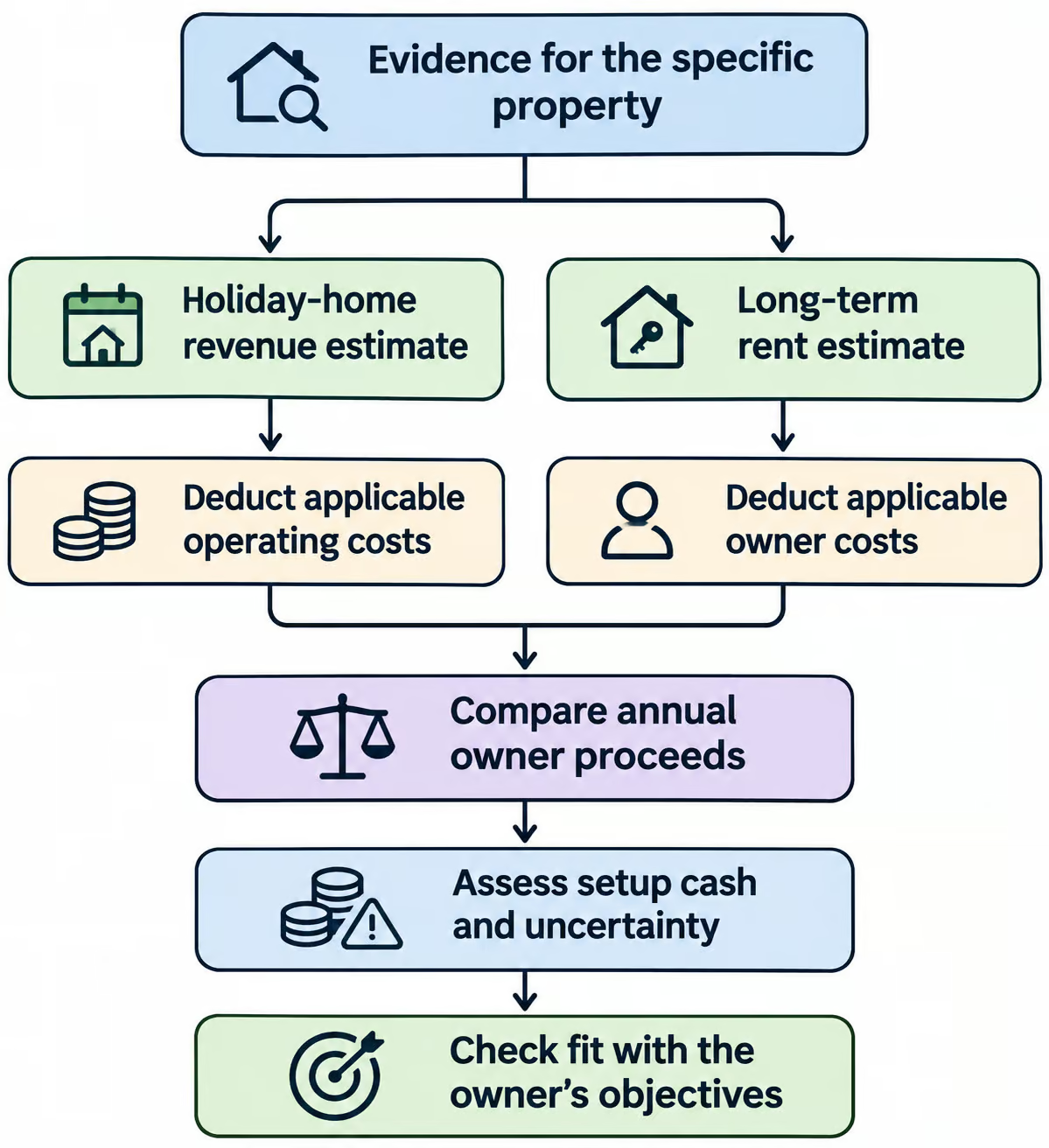
Diagram 1 — Rental comparison framework, prepared 4 November 2026. Original explanatory diagram based on the article’s recommendations. It contains no market statistics or numerical units. Actual results require property-specific evidence.
Define the cost categories consistently
Build a separate operating schedule for each option. For the holiday-home model, investigate management, distribution, utilities, internet, cleaning, laundry, consumables, insurance, maintenance and furniture replacement.
For the long-term model, establish which expenses remain with the owner under the proposed agreement. Include relevant letting and management charges, repair responsibilities and the effect of vacancy between occupants.
Avoid double-counting costs already deducted in an operator’s payout figure. Ask whether the revenue statement includes guest-paid charges or amounts collected for later remittance. A useful comparison reconciles the money collected to the money retained by the owner, with every deduction explained.
Separate setup expenditure from operating income
Furniture, linen, equipment and initial presentation can require cash before the first guest arrives. Obtain quotations and establish who owns the items if an operator supplies them.
Present the initial funding requirement alongside annual operating results. An apartment that appears attractive on a recurring-income basis may still be unsuitable for an owner who cannot comfortably finance the setup.
Allow for replacements using a clearly stated assumption rather than hiding them outside the analysis. Ask what condition standard must be maintained and how spending is approved. The owner needs to understand both the opening budget and the cash required to keep the property competitive.

Test downside conditions
Ask what happens if achieved rates fall, occupied nights decline or repairs remove the apartment from service. Change the important assumptions separately so the owner can see which variables matter most.
For long-term letting, test a gap between tenants, an unexpected repair and delayed collection. Predictability is an objective, not an assurance that every payment arrives without interruption.
Use property-specific evidence where available. If evidence is incomplete, show the uncertainty instead of filling the gap with a market average from an unrelated location. Record the owner’s available cash reserve and tolerance for fluctuating monthly receipts before making a recommendation.
Check the operational workload
A holiday home needs arrangements for guest access, support, cleaning and maintenance between stays. Ask who responds when an appliance fails late at night or a guest cannot enter the property.
Review the operator’s service commitments and escalation process. Request a sample report that connects bookings, deductions and owner distributions, together with the timing of those distributions.
DET’s official system guide covers operational functions including guest check-in, check-out and Tourism Dirham payment processes. Assign responsibility for those functions and confirm the current requirements directly. An owner should be able to identify who performs each task without having to coordinate every incident personally.
Review insurance and contractual protection
Ask an insurance professional whether the proposed use is covered and what exclusions, excesses or conditions apply. Do not assume that an ordinary residential policy automatically matches a hospitality operation.
Dubai’s holiday-home implementing bylaw includes an obligation for a comprehensive insurance policy covering damage guests may sustain, valid throughout the licence term. Obtain advice about how the proposed arrangements satisfy the applicable requirements.
Review the management contract’s treatment of damage, claims, refunds, disputes and termination. Establish who approves emergency expenditure and how supporting invoices are supplied. Clear responsibilities are especially valuable when the owner lives overseas and cannot inspect the property quickly.
Plan personal use and a possible sale
If the owner wants to stay in the apartment, establish how dates are blocked and what happens if a booking already exists. Personal use can affect both availability and the comparison with alternative letting arrangements.
For an anticipated sale, discuss access for viewings, existing guest commitments and the operator’s termination provisions. Do not describe the unit as immediately available without checking actual obligations.
The same principle applies when changing rental models. A decision to switch does not by itself end existing agreements. Obtain the appropriate advice and confirmations before promising possession dates to a new tenant or buyer.
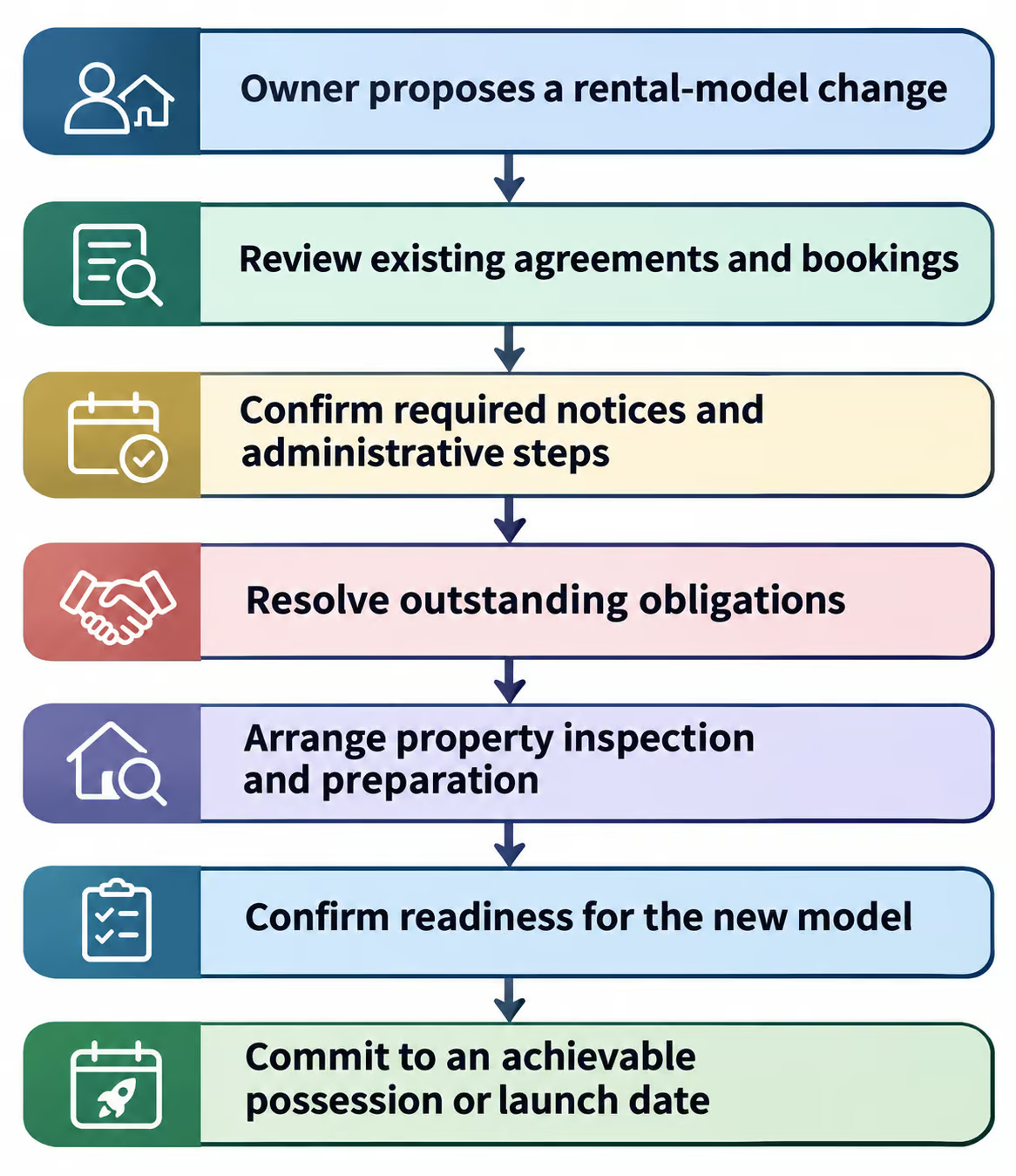
Diagram 2 — Suggested transition planning sequence, prepared 4 November 2026. Original explanatory diagram, not an official universal procedure or statistical graph. No numerical units apply; contractual and regulatory requirements must be checked for the specific property.
A practical example: two owners, different decisions
Consider two owners with similar apartments. The first wants occasional family visits and is comfortable paying for active management. The second wants fewer operational decisions and has no plans to use the apartment personally.
The agent collects the same categories of evidence for both: eligibility, realistic income, costs, management terms and exit arrangements. The conclusions may still differ because the owners value flexibility and predictability differently.
No invented return percentage is needed to explain this example. The lesson is to make the decision criteria visible. Once actual quotations and comparable operating records are available, each owner can assess the financial result against their own priorities.
Create a decision record
Give the owner a short written recommendation supported by the detailed workings. State the preferred option, the reasons, the assumptions and the unresolved questions that could change the conclusion.
Attach quotations, relevant evidence dates and the proposed management terms. Identify which figures are observed results and which are projections. A projection should remain recognisable as a projection when the document is forwarded.
Agree a review date and the conditions that would justify reconsidering the choice. If the owner proceeds, turn the outstanding items into an action list with named responsibilities. A clear decision record makes the recommendation easier to review and implement.
Frequently asked questions
Does a platform listing replace a holiday-home permit?
No. DET’s official guide requires a permit for each holiday home. Confirm the current application and classification requirements before accepting the proposed operating plan.
Is holiday-home letting always more profitable?
There is no universal result established by the evidence reviewed here. Compare actual owner proceeds, setup expenditure, running costs and uncertainty for the particular property.
Are all holiday-home costs waived until April 2027?
The cited resolution addresses holiday-home permit fees for establishments. It does not establish that every operational, commercial or regulatory charge is waived. Confirm the applicable treatment with DET.
Can an owner change models immediately?
Check existing guest bookings, operator agreements, tenancy obligations and the relevant administrative steps. Obtain appropriate advice before committing to a new possession date.
What should a realtor request first?
Start with the owner’s objectives, property documents, a proposed operator agreement and evidence supporting the revenue assumptions. Complete the comparison only when its material gaps have been identified and explained.